

Grainger Center for Conservation & Science
-
 Museums & Conservation Facilities
-
 Fabrication-Ready BIM Models

Precision BIM Coordination for a World-Class Conservation & Research Facility
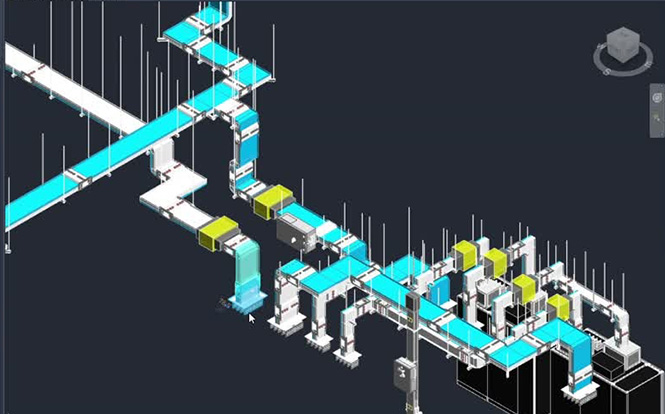
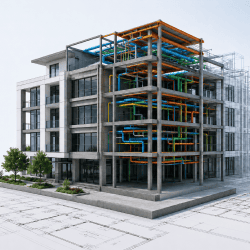
We delivered fabrication-ready Mechanical BIM Modeling and coordinated VDC services for the Grainger Center for Conservation & Science, supporting the precise environmental requirements of a world-class conservation facility. Through Scan-to-BIM, multidisciplinary coordination, and clash detection, we developed accurate, installation-ready models that reduced construction risks and improved overall project efficiency.
The Challenge
Conservation laboratories demand exceptional environmental precision where even minor coordination issues can compromise temperature control, humidity regulation, equipment accessibility, and long-term preservation of invaluable cultural assets. Every MEP system had to function seamlessly within highly constrained building spaces.
Museum-grade environmental control requirements.
Highly congested multidisciplinary MEP coordination zones.
Existing building conditions requiring accurate Scan-to-BIM workflows.
Zero tolerance for installation conflicts affecting laboratory performance.
Our Solution
Roots BIM implemented an integrated BIM coordination workflow combining fabrication-level Mechanical BIM Modeling, Scan-to-BIM, multidisciplinary coordination, clash detection, and fabrication-ready shop drawings to create a coordinated digital environment before construction commenced.
Scope of Work
Mechanical BIM Modeling
Scan to BIM
Clash Detection & Lead Coordination
Federated Model Coordination
Project Impact
25,000 Sq. Ft.
Highly Coordinated Conservation Facility
Fabrication-Ready
Mechanical BIM Deliverables
Improved
Installation Efficiency & Coordination
Reduced
Construction Risks & RFIs
Key Outcomes
-
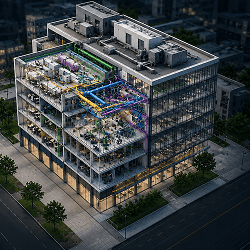
Comprehensive MEP Coordination
Integrated architectural, structural, mechanical, electrical, plumbing, and fire protection systems into a coordinated BIM environment before construction. -
Improved Construction Readiness
Fabrication-ready shop drawings and coordinated models supported accurate installation planning and reduced field interpretation. -
Reduced Coordination Risks
Early clash detection minimized installation conflicts, improved sequencing, and enhanced multidisciplinary collaboration. -
Reliable Existing Condition Documentation
Scan-to-BIM workflows accurately captured existing building conditions, enabling informed engineering decisions and confident project execution.
Related Services


FAQs
Mechanical BIM Modeling, Scan-to-BIM, VDC coordination, clash detection, and fabrication-ready MEP shop drawings.
It accurately captured existing building conditions, enabling precise modeling and informed engineering decisions.
Coordinated models identified clashes early, improving installation sequencing and reducing on-site conflicts.
Strict environmental requirements, congested MEP spaces, existing conditions, and zero tolerance for installation conflicts.
Improved construction readiness, reduced RFIs, enhanced coordination, and fabrication-ready models for efficient installation.

Why Choose Us

Reduced RFIs, Rework & Coordination Delays
Proactive coordination workflows help identify and resolve issues before they impact construction.

Fabrication-Level Accuracy
Focused on LOD 350–500 BIM deliverables that support buildability and execution.

Integrated Digital Engineering
Combining BIM with simulation workflows, 4D scheduling, and 5D cost integration.

Dedicated Project Ownership
A Single Point of Responsibility (SPOR) for every discipline ensures accountability and streamlined communication.